-
Free Shipping
Orders $75 & Up
-
30-day Money Back
Guarantee*
-
100% Secure Online Shopping
SSL - Verified Merchant
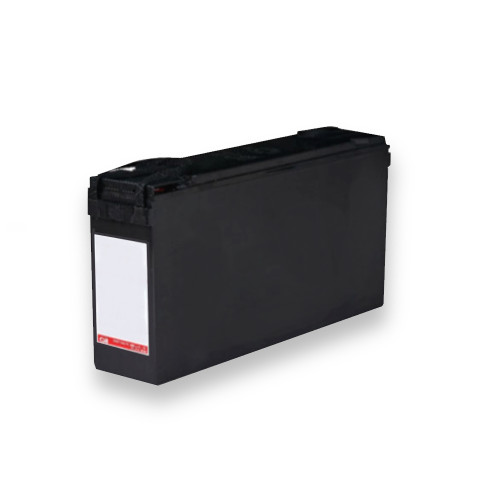
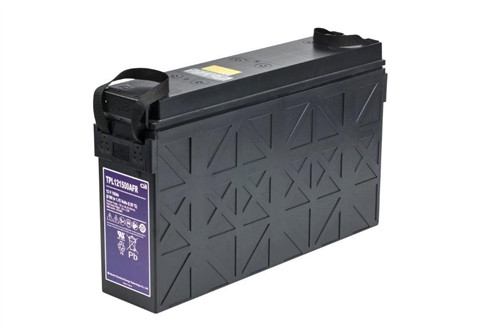
CSB XPL9000FT 12V Front Terminal Battery for Data Center & Telecom Backup
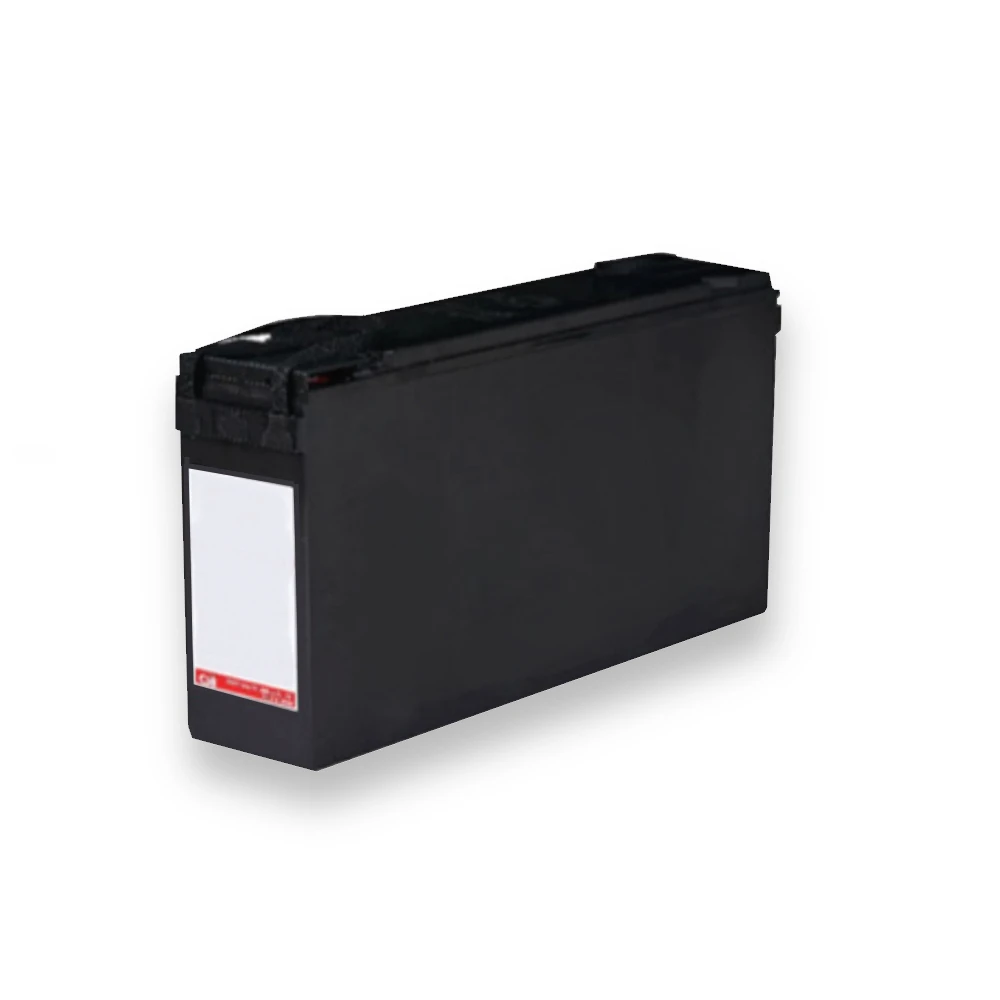
CSB XPL9000FT 12V Front Terminal Battery for Data Center & Telecom Backup
CSB XPL9000FT Battery - 12V 200 Ah Front Terminal Extreme Power AGM
Warranty
The Top of the Extreme Power Range
- 200 Ah at the 20 hour rate - to 1.75 volts per cell at 25°C, from the CSB price list, because this series is rated in watts on its per-part datasheet.
- 5,102 amps of short circuit current - the highest in the range and the figure that governs protective device coordination on this bank.
- 75.00 amps maximum charge current - the recovery ceiling, which on a string this size usually sets the rectifier specification.
- 1,900 amps over 5 seconds - the published peak discharge, which covers inrush rather than any sustained load.
- Front terminal, I2 insert for an M6 bolt - torqued to 44.9 plus or minus 9.0 lbf-in (5.10 plus or minus 1.0 N-m), with both posts reachable from the aisle.
Technical Specifications
| CSB XPL9000FT Specifications | |
|---|---|
| Part Number | XPL9000FT (also searched as XPL 9000FT, XPL9000FTFR and xpl9000ft; CSB prints the flame retardant build as XPL 9000FTFR) |
| Series | XPL, Extreme Power long life, front terminal |
| Battery Type | AGM, valve regulated lead acid (VRLA), pure lead construction |
| Nominal Voltage | 12V |
| Nominal Capacity | 200 Ah at the 20-hour rate to 1.75 VPC at 25°C (77°F), per the CSB price list; the per-part datasheet rates this series in watts only |
| Watts Per Cell, 15 Minutes | 907 W to 1.67 VPC at 25°C |
| Watts Per Cell, 5 Minutes | 1,403 W to 1.67 VPC at 25°C |
| Watts Per Cell, 30 Seconds | 2,070 W to 1.67 VPC at 25°C |
| Maximum Charge Current | 75.00 A |
| Maximum Discharge Current | 1900 A (5 second rate) |
| Short Circuit Current | 5,102 A |
| Internal Resistance | Approximately 1.86 milliohms |
| Terminal Type | Front terminal, I2 threaded lead alloy insert, accepts an M6 bolt |
| Terminal Torque | 44.9 ±9.0 lbf-in (51.7 ±10.3 kgf-cm, 5.10 ±1.0 N-m) |
| Length | 21.97 inches (558.0 mm) |
| Width | 4.96 inches (126.0 mm) |
| Height | 12.72 inches (323.0 mm) |
| Weight | 153.22 lbs (69.50 kg) |
| BCI Group Size | 23 inch rack |
| Float Charging Voltage | 13.5 to 13.8 VDC per battery at 25°C (77°F) |
| Equalization Charging Voltage | 14.4 to 15.0 VDC per battery at 25°C (77°F) |
| Operating Temperature | Nominal 25°C (77°F); discharge -15°C to 50°C (5°F to 122°F); charge and storage -15°C to 40°C (5°F to 104°F) |
| Self Discharge | Less than 10 percent after 90 days at 25°C; storable to six months before a full recharge |
| Container Material | Polypropylene (UL 94-HB); flame retardant 94-V0 available on request |
| Standards | IEC 60896-21/22:2004; UL1973 Listed (MH66728); UL1989 Recognized (MH14533); TUV NORD to ISO 9001:2015 |
| Design Life | Up to 10 years in standby service at 25°C; greater than 12 years on the Eurobat 20°C basis |
| Warranty | 5 years (CSB, XPL Extreme Power range) |
| Country of Origin | Taiwan |
Where This Battery Is Used
- Large central office DC plant - 48 volt strings where the bank is the last line between the site and a hard down.
- Hyperscale and colocation battery rooms - racked banks serviced in place on a scheduled impedance program.
- Utility scale standby - installs where the ten year design life and the five year term are both part of the specification.
Ordering and Freight
Frequently Asked Questions
Is the 9000FT worth it over the 8000FT?
In the same rack space, usually. The case, the footprint and the mounting are identical, so the only physical cost is 9.26 pounds a block. For that you gain 86 watts per cell at 15 minutes, 5 amp hours, and a drop in internal resistance from 2.17 to 1.86 milliohms. If the rack and the shelf rating already take the 8000FT, there is no fit argument against the larger block and the decision comes down to budget.
What does 1.86 milliohms mean on a real string?
On a forty block bank that is roughly 74 milliohms of internal resistance across the string, against about 87 for the same bank built on 8000FTs. Under a hard inverter step the lower figure means measurably less sag, so the bank stays above its cutoff voltage longer and delivers more of the runtime it was sized for. On short strings the difference is small; on long ones it compounds.
What does the 9000 in the name represent?
A nominal output for the whole block at the 5 minute rate. Six cells at 1,403 watts come to 8,420 watts, which CSB rounds up to 9000. That is the largest gap between badge and measurement anywhere in the range, about 6 percent, so a string sized from model numbers rather than per-cell figures will come out short here more than on any other XPL model.
How should a bank this size be maintained?
Take an impedance reading on every block at commissioning and record it against the serial, then re-read on a fixed interval and watch the drift rather than the absolute value. Front terminals mean those readings happen without unracking anything. Keep float in the 13.5 to 13.8 VDC per battery band, and log the room temperature on the same schedule, because ambient is what consumes design life on a bank that is rarely called on.
Send the bank size, the rack detail and your rectifier rating. A specialist sizes the string, checks the recharge window and puts the whole thing in writing with no obligation.
Call 1-877-775-4381 · battery specialists, not a call centerWARNING: Cancer and Reproductive Harm - www.P65Warnings.ca.gov (State of California only).